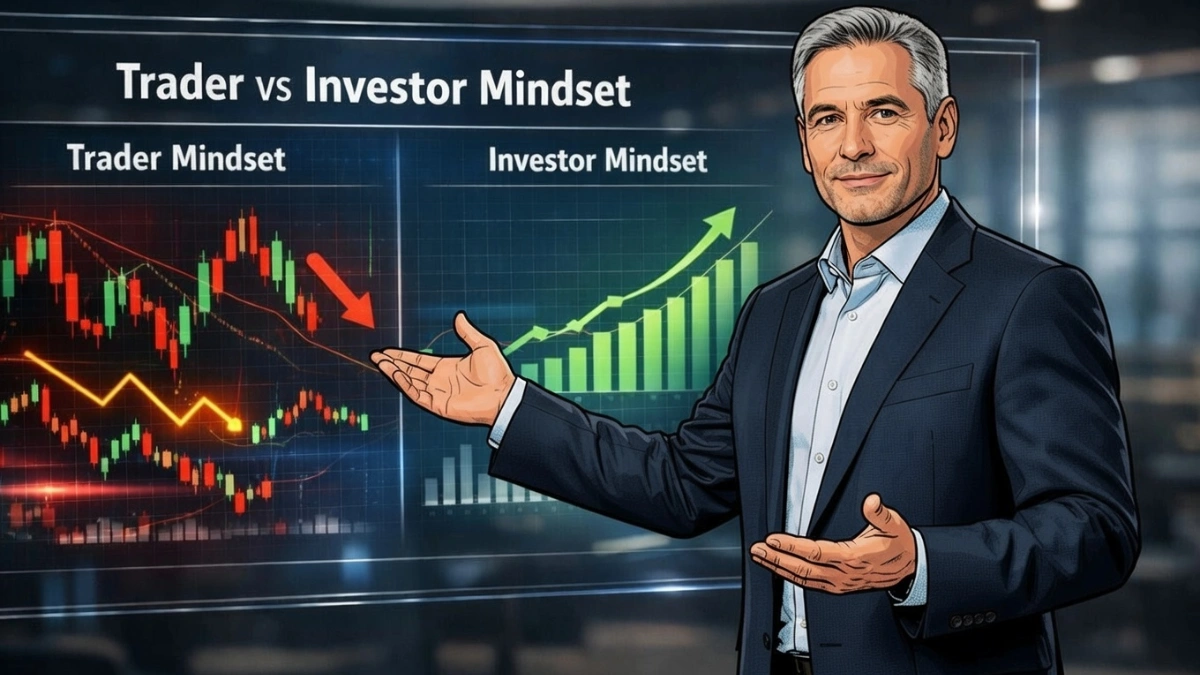

In the world of stock markets and personal finance, success is not driven only by knowledge or capital. Mindset plays a critical role. The way a trader thinks is very different from how an investor approaches the market. Understanding this difference can help you choose the strategy that suits your goals, personality, and risk tolerance.
Many people lose money not because the market is unpredictable, but because they apply the wrong mindset to the wrong approach.
How a Trader Thinks About the Market
A trader focuses on short-term price movements. The main objective is to take advantage of market volatility and earn profits from frequent buying and selling. For a trader, timing matters more than ownership.
Traders rely heavily on charts, technical indicators, trends, and market sentiment. Decisions are often fast, rule-based, and emotionally controlled. A successful trader accepts small losses quickly and moves on without attachment to a particular stock.
Risk management is central to the trader mindset. Protecting capital is often more important than chasing large gains. Discipline, patience, and emotional neutrality are essential traits.
How an Investor Thinks About the Market
An investor takes a long-term view. The focus is on owning quality businesses and benefiting from their growth over time. Price fluctuations in the short term are less important compared to fundamentals such as earnings, cash flow, and long-term potential.
Investors study company performance, industry trends, and economic outlooks. Decisions are slower, more deliberate, and based on conviction rather than daily market movement. Temporary market drops are often seen as opportunities rather than threats.
The investor mindset values compounding, consistency, and time in the market. Emotional stability comes from believing in the underlying asset rather than reacting to daily price changes.
Time Horizon Is the Biggest Difference
The trader mindset operates in minutes, hours, or days. Every session matters, and results are measured frequently. In contrast, the investor mindset operates in years or even decades. Short-term noise is ignored in favor of long-term growth.
This difference in time horizon affects stress levels, decision-making speed, and overall lifestyle. Trading demands constant attention, while investing allows more mental space and patience.
Risk Perception And Emotional Control
Traders see risk as something to be actively controlled through stop losses and position sizing. Losses are part of the process and are accepted quickly. Emotional discipline is trained through rules and systems.
Investors see risk as the possibility of permanent loss of capital. Volatility itself is not considered risk unless it affects long-term value. Emotional control comes from research, diversification, and confidence in long-term outcomes.
Which Mindset Is Right For You
Neither mindset is better or worse. The right choice depends on your goals, available time, temperament, and financial situation. People who enjoy fast decisions, data analysis, and active involvement may align better with trading. Those who prefer patience, research, and long-term wealth creation often suit investing.
Some individuals successfully combine both approaches by keeping separate capital and clearly defined rules for each.
Conclusion: The difference between a trader mindset and an investor mindset lies in time horizon, decision-making style, risk perception, and emotional approach. Traders focus on short-term opportunities and discipline, while investors focus on long-term value and growth. Understanding these differences can help you avoid costly mistakes and build a strategy that truly matches who you are and what you want from the market.
Disclaimer: This article is for educational and informational purposes only and does not constitute financial or investment advice. Trading and investing involve risk, and individual results may vary. Readers should consider their financial goals and consult a qualified financial professional before making any investment decisions.