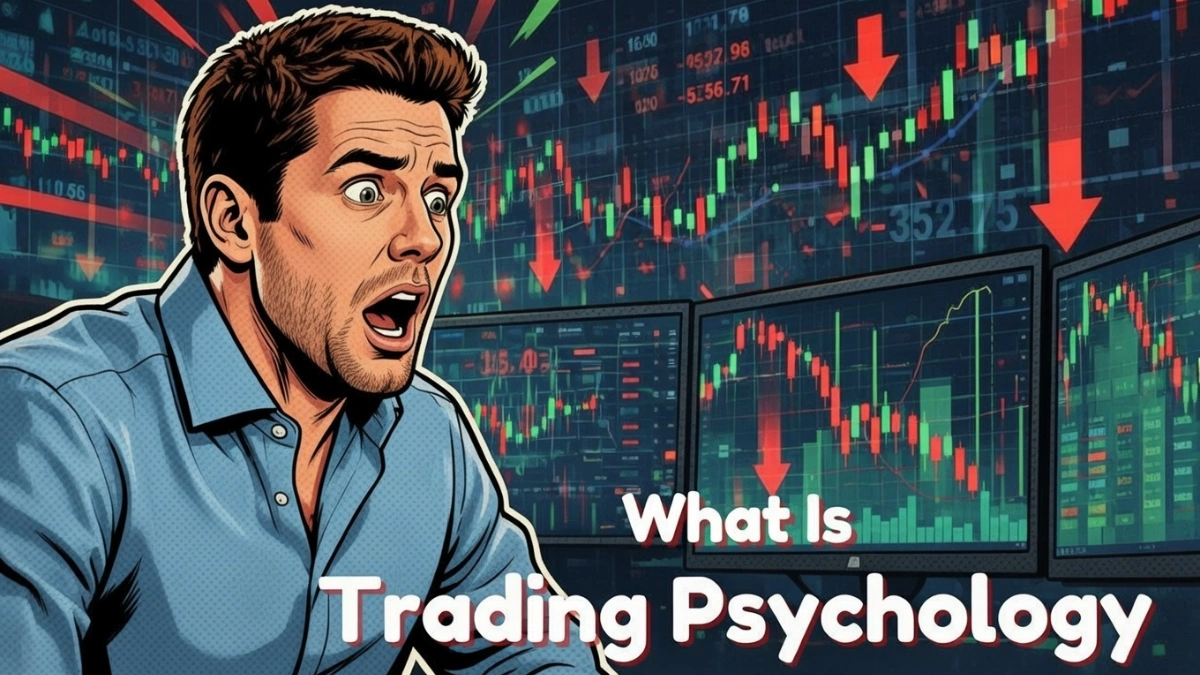

Many traders spend years learning charts, indicators, and strategies, yet still struggle to make consistent profits. The reason is often not a lack of knowledge, but a lack of control over emotions. This is where trading psychology becomes crucial. Trading psychology refers to the mindset, emotions, and mental discipline that influence how decisions are made in the market.
No matter how strong a strategy looks on paper, poor psychology can destroy results in real trading conditions.
What Is Trading Psychology
Trading psychology is the study of how emotions such as fear, greed, hope, and frustration affect trading decisions. It focuses on how traders think, react, and behave before, during, and after trades.
A trader with strong psychology follows rules even under pressure, accepts losses calmly, and avoids emotional decision-making. On the other hand, weak psychology leads to impulsive trades, revenge trading, overtrading, and ignoring risk management.
In simple terms, trading psychology is the mental side of trading that determines whether a trader can execute a strategy consistently.
Why Emotions Play A Major Role In Trading
Financial markets involve uncertainty, and uncertainty naturally triggers emotions. Fear can cause traders to exit good trades too early, while greed can push them to hold positions too long or take excessive risk.
Common emotional challenges include hesitation before entering a trade, panic during drawdowns, overconfidence after winning streaks, and frustration after losses. These emotional reactions often lead to breaking trading rules, which is one of the biggest reasons traders fail.
The market does not punish bad intentions, but it does punish emotional mistakes repeatedly.
Why Trading Psychology Matters More Than Strategy
Many traders use similar strategies, yet results vary widely. The difference lies in execution. Trading psychology determines whether you can follow your plan during both winning and losing phases.
A disciplined trader understands that losses are part of the process and does not try to recover them emotionally. This mindset helps protect capital and maintain consistency over time. Without psychological control, even the best strategy becomes unreliable.
Consistency in trading is not about predicting the market correctly every time, but about behaving correctly every time.
How Trading Psychology Impacts Risk Management
Risk management is closely tied to psychology. Traders with poor emotional control often increase position size after losses, remove stop losses, or chase trades out of fear of missing out.
Strong trading psychology allows traders to accept predefined risk, respect stop losses, and avoid emotional exposure. This protects the account from large drawdowns and helps maintain confidence even during difficult periods.
In the long run, psychological discipline preserves capital more effectively than any indicator.
Developing Strong Trading Psychology
Improving trading psychology starts with self-awareness. Traders must recognize emotional patterns and understand how they react under pressure. Creating a clear trading plan, maintaining a trading journal, and focusing on process rather than profit are key habits.
Accepting uncertainty is also essential. No trade is guaranteed, and learning to be comfortable with probability helps reduce emotional stress. Over time, discipline and emotional control can be trained just like any other skill.
Conclusion: Trading psychology is the foundation of successful trading. It shapes how decisions are made, how risk is handled, and how consistently a strategy is executed. While technical skills and market knowledge are important, psychology ultimately determines long-term survival and success in the market.
Traders who master their mindset gain a powerful edge, not over the market, but over themselves.
Disclaimer: This article is for educational and informational purposes only and does not constitute financial or investment advice. Trading involves risk, and individual outcomes may vary. Readers should evaluate their own risk tolerance and consider professional guidance before engaging in trading activities.